Showing posts with label Saving Money In The News. Show all posts

Save a bundle on your tech bills

By Karen Blumenthal | The Wall Street Journal.com – Wed, Feb 20, 2013 12:50 PM EST

Before you buy another product, consider this: Expenditures on home technology have to come from somewhere. All those bells and whistles—from data plans for smartphones to digital video recorders—are taking an increasing chunk of the family budget, even as household spending has been relatively flat.

If you want to learn how to save a bundle on your tech bills check out the link below for more information.

Get Out OF Debt Fast


Get Out Of Debt Fast, But Don't Run
From Money Talks News 

Generally the process of realizing you have money troubles goes like this:
I don’t have a financial problem.
Money feels like it’s getting a little tight.
OMG, I’m in big trouble. I need to find a solution now! The sky is falling. Help. Help. Help.

Financial problems slowly creep up on you, masked by denial, until they smack you in the face and you panic. You want to run.

For the rest of this interesting article from Money Talks News click on the blue link below.

Best Toys For Every Age

Best Toys For Every Age 

By Parenting The Shine | Parenting

Wondering what toys to buy your kids this holiday season? Toy expert and president of ToyInsider.com , Laurie Schacht has rounded up the best toys for every age for 2012. Laurie and her team have tested, reviewed, and played with hundreds of toys, gadgets, and games, and selected the best toys based on functionality, creativity, and educational merit. Some of these toys may be hard to find as the holidays approach, so you may want to get started with your shopping!

FOR MORE IDEAS READ CLICK THE LINK BELOW

Controlling Your Thermostat Remotely

How to Squash Your Monthly Energy Bill & Save Money With a Programmable Thermostat

by , Inhabita


One of the coolest features that newer WiFi-enabled programmable thermostats offer is the ability to adjust the temperature of your home from work, while on vacation or basically anywhere with an internet/mobile phone connection. In addition to being a fun way to prank the other members of your family by making them freeze or burn (just kidding, please don’t do this), you can save a lot of energy with this function by checking and adjusting your temperature settings right from your computer, tablet or smartphone.
Desktop Apps

Most WiFi-enabled programmable thermostats have their own desktop apps or programs that allow you to register and login to control your thermostat using your computer. For example, Honeywell’s is called My Total Connect and it’s very easy to set up. The registration is very similar to setting up a router, and Honeywell even has a step-by-step video showing you how to set up your wireless connection to your thermostat.
Mobile Apps

Having access to your thermostat via computer is great, but what if you’re on your way home from work or sitting on a beach? Many WiFi-enabled thermostats now have their own apps that let you receive high/low temperature alerts and control your heating and cooling right from your smartphone.

FOR MORE INFORMATION CLICK THE LINK BELOW

Money Mistakes That Can Ruin A Marriage


According to Money Talks News there are 10 Money Mistakes That Can Ruin a Marriage.  Research suggests the way you and your spouse handle money is a significant predictor of whether you'll have a long-lasting marriage. What should you look out for? As anyone who’s been there knows, there’s no such thing as a friction-free marriage. But arguing can be ominous when the topic is money.

Couples who reported disagreeing about finances once a week were 30 percent more likely to get divorced than couples who reported disagreeing about them once a month, according to a Utah State University Study. In another survey, published in the Forum for Family and Consumer Issues, finances proved to be the leading cause of conflict in marriage, with 39 percent of respondents listing it as their primary issue and 54 percent as their secondary issue.

How can you be sure money matters won’t sabotage your marriage? Watch Money Talks News founder Stacy Johnson's video about money and love, then read on for more…

Is Salt Beauty's Next Big Ingredient


Is Salt Beauty's Next Big Ingredient?
By YouBeauty.com | Love Your Body
Salt on Your Skin: Pros and Cons
Sea salt can leach moisture out of your skin. But it's a wonderful exfoliant. "In its raw, crystal form, salt stimulates skin renewal and boosts radiance," says Idit Gandelman, Global Head of Training at Ahava (a skincare company based on Dead Sea minerals). A handful of coarsely ground sea salt, mixed with skin-nourishing grapeseed oil can slough off dead skin cells, while the oil replenishes moisture.

CLICK BELOW TO READ MORE
 http://shine.yahoo.com/beauty/salt-beautys-next-big-ingredient-123400868.html

Ways to Negatively Affect Your Credit Score

We all want and need our credit score to be as high as possible. It is surprising how many little things that many people do without even knowing the affect that it will have on your credit score. According to Miranda Marquit, financial expert. Her work can be found on many financial websites, including US News, Yahoo Finance, and Huffington Post. These are the top ten things that lower our credit score. If you are doing any of these things then it is time to stop and starting getting that score back up.

1. Skip the Rent. If your landlord decides that he or she is sick of your slow payments, you can be reported to the credit bureaus. On top of that, your landlord can ask a collection agency to attempt to collect on your delinquent payments. Once that happens, the credit bureaus find out and report it.
2. Failure to Pay Medical Bills. With the rising costs of health care, even those with health insurance can find themselves facing high medical bills. Don’t ignore these bills, though. Health care service providers can decide to report your unpaid bills to the credit bureaus or send your account to collection. Collection accounts look especially bad on a credit report.
3. Ignore Library Fines. For many people, the idea that a $5 library fine could be harmful to their financial situation seems silly. However, not paying could cost you even more than what you owe. In order to collect more money and help ease strained local budgets, some libraries have been sending unpaid fines to collection agencies. Once your library fines go to the collection agency, it appears on your credit report. On top of that, the collection agency might add its own fees to the fine. Your $5 library fine could easily balloon into a $20 or $30 cost — and bring down your credit rating on top of it all.
4. Rack Up the Back Taxes. Your unpaid back taxes aren’t just a matter between you and the government. If you end up racking up unpaid taxes, the government can place a lien against you. A tax lien is one of those public records items that appears on your credit report and can drag down your score.
5. Miss Utility Payments. Make sure you pay your utility bills on time. And, if you move, make sure you are completely settled with the company. Even an address forward might not be enough to catch all your final bills; 30 days after your move, call the utility companies and make sure everything is squared away.
6. Buy a New Cell Phone. Increasingly, cell phone providers are checking your credit when you sign up for a contract. In some cases, the company performs a soft inquiry, and your score isn’t damaged. Other times, though, the provider runs a hard credit check. It looks as though you are applying for credit — even though you don’t think that you are.
7. Open a Bank Account. Not all financial institutions check your credit before you open an account, but some banks and credit unions do. Indeed, one of the reasons that your checking account might be denied is due to your credit report.
8. Cancel Your Gym Membership Improperly. When you sign your gym membership agreement, make sure you understand what actions you need to take in order to cancel your gym membership — and find out what the gym will do if you don’t follow proper procedure.
9. Disregard Traffic Tickets. If you have unpaid parking tickets or you ignore speeding tickets and other violations, your credit score could suffer. Don’t think that a violation in another state can be safely ignored . Whenever a ticket is written out, your license plate number is recorded, and it is run. They know who you are, and they aren’t afraid to report you. It may take a little longer, but unpaid tickets will eventually catch up to you. 
10. Close Unused Credit Accounts. When you aren’t using your credit accounts, it makes sense to close them, right? After all, it’s not like you are borrowing money with those accounts anymore. Unfortunately, closing those unused credit accounts can have a negative impact on your credit score. Before you close an old, unused credit card, reconsider. Think about how long you’ve had the account, and how it has been helping your credit history length.
These are just a few of the ways that you can have a negative affect on your credit score.  I advise you to do your research before you do anything to see how it will affect your credit score.  What other ideas do you have that could be a negative affect on your credit score?

CVS vs. Walgreens

This comparison was done By Angela Colley | Money Talks News

I recently set out to compare prices at both drugstores. Then I also factored in prices at big-box retailer Walmart and online merchant Drugstore.com, which was acquired by Walgreens in 2011 but offers different prices on many items. Here’s what I found:

This is a easy way to see what stores are offering the best prices at just a glance. Click the link below to see all of the article by Angela Colley | Money Talks News

Save Money onTextbooks


At KCKCC, a novel way to save money on textbooks
BY MARÁ ROSE WILLIAMS The Kansas City Star

An effort to further literacy is what initially got Crane-Smith and students at the college’s Intercultural Center to spend hundreds of hours collecting, sorting and reselling books of all kinds as part of KCKCC’s My Shelf to Yours book program.

For more information on how to save money on textbooks read Ms. Williams' article below.


http://www.kansascity.com/2012/10/14/3867403/at-kckcc-a-novel-way-to-save-money.html

Save Money On Gas


Tips, Smartphone Apps Can Help Drivers Save Their Gas Money
LOS ANGELES (CBSLA.com)


We may not find relief at the gas pump any time soon, so here are a few tips to conserve fuel.
The U.S. Department of Energy says, if you can’t buy a more efficient vehicle, try to drive more efficiently, keep your car in shape and plan your trips in advance.

Pay Less Online Now


Five ways to pay less online
By Kelli B. Grant | MarketWatch – Mon, Sep 17, 2012 12:56 PM EDT

Online shoppers intent on getting the lowest price may want to make themselves comfortable: Shopping around is easier than ever, but it still takes some patience — and a visit to more than a few sites.

Price-comparison sites have long been consumers’ go-to resource for checking prices online, and related apps have made it easy for pavement pounders to perform a quick buy-or-not calculation while in stores. Some 55% of online shoppers always check for competitive prices before buying, according to Forrester Research. And when shoppers are buying a big-ticket item or something that has a reputation for variable pricing, they’re even more apt to compare, according to Sucharita Mulpuru, an analyst with Forrester Research. “It’s a way to arm yourself with the most data possible,” she says.Pronto Pronto.com wins plaudits for enabling users to refine product searches by category to weed out unwanted items.


But experts say price-comparison engines have slowly become less useful for bargain hunters. Google (GOOG) recently redesigned its Google Shopping engine to include listings only from companies that pay to be included. On the plus side, that’s likely to weed out suspect vendors and outdated prices. But it also means small businesses are less likely to get a mention, says Jack Vonder Heide, chief executive of the research group Technology Briefing Centers. Nor will they see listings from Amazon — the retail giant (AMZN) has removed its Google Shopping listings.

A Google spokeswoman says the changes are about providing more accurate results for shoppers. “We truly believe that when merchants have a financial stake in the shopping experience, they will send us better product data,” she says. And Google isn’t alone. Other engines may also stick to paid listings, says Vonder Heide, or only include major retailers.

Then there’s the dynamic-pricing problem. Web retailers like Amazon and Best Buy (BBY) have begun changing their prices multiple times throughout the course of the day. Many of the price-comparison sites, however, update their own records just once a day, so the prices they’re showing you are wrong, says Edgar Dworsky, founder of ConsumerWorld.org. “Yesterday’s price won’t do you any good,” he says.

Shoppers’ best bet is to have not just one but several price-comparison sites bookmarked, experts say. Ideally, that results in a wider selection of retailers and a more complete view of sales and price variations, Mulpuru says.

Here are five that the experts say are worth bookmarking:

Bing Shopping: If you’re browsing models before hunting down the best prices, Bing offers a “compare” feature and virtual shopping lists that can be helpful in making a decision, says Michelle Madhok, chief executive of shopping site SheFinds.com. Price-check results include a price history over six months, plus reviews and specs on a product when applicable. But there’s no rating system for merchant reliability, and the listings aren’t always accurate. A hunt for the novel “Gone Girl,” brought up a low price, but it was from an expired auction, while a search for the Canon PowerShot D20 delivered a lowest listing of $247, but clicking on the link led to a U.K.-based site that actually wanted 247 pounds, or $397. A Bing spokeswoman says the Microsoft (MSFT) unit’s site team approves merchants before adding the free product listings and offers guidelines to merchants to make listings more accurate.

Decide: One of the better sites at capturing price fluctuations, Decide.com compares price data against factors like a new model’s launch date to help shoppers decide whether to buy or wait, says Mulpuru. Ratings also point out when consumers can “do better” — that is, when there are comparable items with more favorable reviews and similar pricing. There’s no way to sort listings by best total price with tax and shipping, however, so it can take time to review. Users can’t search for everything, either. Decide.com currently covers a few dozen items within broader categories such as electronics and appliances. A spokesman says the site, which debuted last year, continues to add new categories and capabilities.

Google Shopping: Even with the changes, it’s still a more-than-worthy engine, says Vonder Heide. “You’re going to have the safest buying experience,” he says. The recent redesign also included larger images with search listings, so it’s easier to see at a glance if those are say, the model of Ray Ban sunglasses you want. Listings show which local stores list an item in stock, as well as those that accept Google Wallet mobile payments. Web options often include eBay (EBAY) stores and current auction listings (used condition noted). But of course, with the shift to only paid listings, shoppers won’t see as wide a selection of businesses as in the past, he says. A Google spokeswoman says the redesign will still list products by relevancy, regardless of what advertisers pay to be listed. Nonpaying merchants will also continue to be included in the listings for a short time, she says.

PriceGrabber: A price history tracks the average and lowest prices over time, and shoppers can also set price alerts to get an email when the item drops below a set dollar amount. Listings include big retailers as well as eBay sales and smaller specialty stores. Results initially separate merchants into “featured sellers” (those that paid) and “more sellers” (that didn’t), but it takes just one click to sort by total price and mix the two together into one list. A spokesman says that functionality makes it clear for consumers that some retailers have paid to be featured, without compromising their ability to find the best deal. But finding some good deals requires a look through the whole list — on a Whirlpool dishwasher, one of the lowest prices got pushed to the bottom of the page because shipping and tax couldn’t be calculated. Those instances are rare, and usually stem from incomplete data passed from a retailer, says a spokesman.

Pronto.com: Users can refine product searches by category to weed out unwanted items, like the accessories for a particular smartphone instead of the handset itself, says Madhok. Search results also allow winnowing by category-specific attributes like the color of a digital camera, or liquid versus cream foundation in makeup. There’s a page of details on each merchant, including which credit cards they accept and where they charge sales tax, but there are no reliability ratings. Most listings do not note shipping price, either, except when it’s free. Pronto.com did not respond to requests for comment.

How to save money on groceries without clipping coupons


Ten ways to spend less on the food you buy.

By Andrea Dashiell

Special to The Seattle Times

On TV, extreme couponers can save 99 percent off their grocery bill, but in real life, few of us have the time (or maybe, dedication) to pull that off. But we can still save a significant amount of money on our groceries each week by putting forth just a little bit of effort.

If clipping coupons isn't on your list of things to do, but shaving $25-$50 off your monthly grocery bill is, here are a few ways to make it happen. 


If you are interested in ways to save money on your groceries then read Andrea's article below. I found it to be very interesting.

10 Things That Used to Be Free


10 Things That Used to Be Free and How do We Get Them As Cheap As Possible?
By  | Sep 17, 2012

We love “free” stuff, whether it’s an autograph after a concert, a towel to wave during football games, or chocolates on a hotel pillow. Sure, we paid for the tickets and the hotel room, but nevertheless, the extras were “free” – and that feels good.
But in recent years, freebies from no-fee checking to in-flight meals have vanished. Money Talks News founder Stacy Johnson offers an amusing glimpse into some of the goods and services that were once free but now have a price tag. Well, at least his video is free. So what types of goods and services now require that we pay a pretty penny? And what can we do to make sure we get these items as cheaply as possible? Here are some things to consider:
Read on for more information…

New ways to save water?


New ways to save water
By r. dennis hansen
First Published Sep 22 2012 01:01 am • Last Updated Sep 22 2012 01:01 am


Careful planning by considering existing and future technological advances is one obvious solution.
When we make long-term forecasts of future water needs, planners need to consider one important fact: Water conservation technology is progressing rapidly. Great strides are being made and will continue to be made by innovators.  
Want more information on how to save water?  Click on Mr. Hansen's link below.

Insider travel tips.

Outsmart Your Fellow Traveler

Store-brand or name-brand which is the better deal?

Store-brand vs. name-brand taste-off


Consumer Reports – Tue, Sep 11, 2012 12:46 PM EDT


http://shopping.yahoo.com/news/store-brand-vs--name-brand-taste-off.html


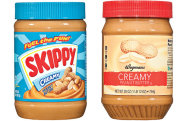
Toss-ups: Skippy vs. Wegmans
Skippy 20 cents per serving, Wegmans 15 cents per serving.


Over the years, we’ve found that a wide variety of store brands perform about as well as name brands. That’s what readers have told us, too. When we surveyed more than 24,000 of them about supermarket shopping last year, 72 percent said they’d bought store brands in the past month, and 74 percent were highly satisfied with the quality of store brands at their supermarket. Asked “In general do you think that store brands are usually better, the same as, or worse than national brands,” 3 percent said better, 78 percent said the same, and 18 percent said worse.